
Ultrasonic Welding Machine Cost and Factory Quote Checklist
A useful ultrasonic welding machine price is tied to a part and a production requirement. Hyusonic’s plastic welding machine page publishes a broad $2,000–$50,000 range. Use it as an initial budget reference, then confirm the currency, machine configuration and included deliverables in a written quotation.
A factory-ready package may also require a custom horn, fixture, inspection equipment and installation. For ultrasonic metal welding, request a separate specification based on the metal combination and joint geometry.
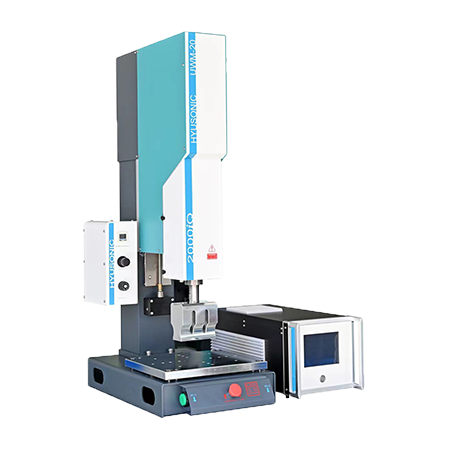
Start with a documented equipment scope
First establish whether the offer covers an ultrasonic component set, a complete press or an automated production cell. A component set still needs mechanical integration and controls. Even two complete machines with the same frequency and rated power can include different actuators, sensors and welding modes.
Ask what measured weld demand justified the selected generator. Its nominal power rating should suit the application and duty cycle. It does not describe the amplitude delivered at your joint or establish whether the part’s support and joint geometry are suitable.
Ask suppliers to separate these items so every quotation answers the same questions.
Quotation item | What to confirm |
Base machine | Generator, acoustic stack, actuator, controller and welding modes. |
Application tooling | Horn, fixture, design work, tuning and spare tooling. |
Process monitoring | Sensors, weld limits, data export and any software fees. |
Automation | Loading, unloading, inspection and factory control interfaces. |
Acceptance | Sample conditions, test methods, run duration and documentation. |
Delivery | Packing, shipping terms, installation, training and warranty scope. |
Allow for engineering behind the horn and fixture
A custom ultrasonic horn must fit the part and vibrate appropriately. Contoured contact faces, large welding areas and several weld locations can add engineering and machining work. The fixture must locate the assembly and support it under welding force.
Herrmann’s sonotrode engineering documentation describes finite-element calculations and measurement of amplitude distribution. That explains why tooling scope includes more than a machined shape. Ask whether the quoted work includes acoustic verification, revisions after sample trials and replacement-tool specifications.
For several part variants, ask which components are shared and which need their own horn or nest. Include changeover time and recipe selection in the trial. A station that accepts all variants mechanically still needs a validated welding process for each material and joint.
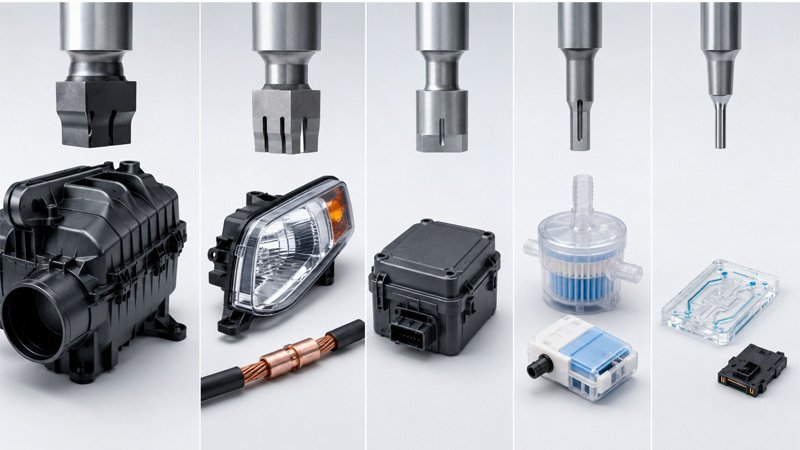
Specify the control functions your part needs
Servo and pneumatic describe how the press moves. Time, energy and collapse-distance modes describe how a weld is controlled or stopped. Treat them as separate choices when comparing configurations.
If your assembly needs controlled dimensions or traceability, identify the required measurements, process limits and data records. Check which functions are standard and which are optional on platforms such as Hyusonic’s iQ Series plastic welder.
A 2024 Welding Journal study modeled welding speed, time and force using material properties and joint geometry, with experiments on ABS, PC and PBT. Its relevance to purchasing is practical: the part influences the required process. Ask the supplier to demonstrate suitable control on your samples at the required production rate.
A weld monitor confirms that recorded process values fall within the programmed limits. It does not independently prove that every assembly is leak-tight or meets its load requirement. Budget any separate inspection needed to verify those outcomes.
Define the automation sequence before counting heads
For custom automated welding machinery, list loading, locating, welding, holding, inspection and unloading steps. A short vibration time does not describe the complete station cycle. Include operator tasks and tool changes when estimating output.
Generator architecture also changes the equipment scope. Dukane’s Multi-Point Control documentation describes sequencing one power supply between several probes, with individual process monitoring. Sequential operation and simultaneous welding require different capacity planning. Ask each supplier to state the operating sequence and demonstrate the resulting cycle time; weld-head count alone leaves that question unanswered.

Compare the cost per accepted assembly
Spread the installed investment over a stated service life, add labour, maintenance and utilities for the same period, then divide by the expected number of accepted assemblies. Include rejected components, inspection time, changeovers and downtime in the comparison.
Use demonstrated production results wherever possible. Rated generator power is not average electrical consumption. For operating-cost estimates, request measured electricity and compressed-air use under representative production conditions. A quotation should also state spare-horn availability and support arrangements, because a missing replacement tool can interrupt production.
Send the information that makes a quotation useful
Provide the material grade, drawings, part dimensions, joint location and physical samples where available. State the required strength, leak limit, appearance and final dimensions. Include annual volume, shift pattern, target cycle time and automation requirements. For PP components, our polypropylene welding guide explains relevant material and joint details.
Agree how acceptance will be demonstrated before ordering. Specify representative sample batches, the tests to perform and the records to deliver. If the drawing or material changes after tooling approval, clarify how that affects the quotation and delivery schedule.
Send Hyusonic your application details for a factory quotation. A clear specification lets the engineering team propose the equipment, tooling and integration scope needed for your production task.