
How To Slice Les Miserables Cake
Publish Data:2025.7.15 Author: Hyusonic
The Origin of les miserables cake
Les Misérables cake, also known as les mis cake, is a classic dessert with a rich history rooted in Belgium. It was created by Belgian pastry chef Pierre Gaelens in 1932. Gaelens, who had learned his craft at the Maison Jean Bol pastry shop in Brussels, opened his own bakery in the Belgian coastal town of Knokke and named this creation “Le Misérable.”
The name “Les Misérables cake” has an interesting story behind it. The inspiration comes from Victor Hugo’s famous novel “Les Misérables.” The original recipe used water instead of milk in the custard, a cost-saving measure that gave it a “miserable” connotation. However, this adjustment did not compromise its deliciousness; instead, it became a unique feature of the cake. The les mis cake recipe is a testament to resourceful baking.
Over the years, Les Misérables cake has become a symbol of Belgian baking heritage, especially in Knokke, where the Gaelens family’s bakery still serves the traditional version of this beloved dessert. It’s a staple in Belgian patisseries and a sought-after dessert for special occasions.
The Craftsmanship and Cultural Expression of les miserables cake
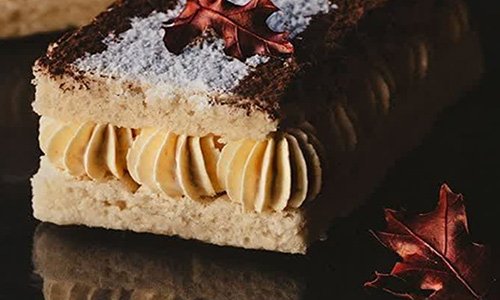
The craftsmanship of Les Misérables cake is a testament to the precision and artistry of Belgian baking. It consists of layers of almond sponge cake and a delicate French butter cream known as Patê à Bombe.
The almond sponge cake is made with high-quality almond flour, a nod to the almond-growing tradition in the Flemish region of northern Belgium. The sponge has a light and fluffy texture with a slightly crisp outer layer, adding a wonderful contrast to the soft cream. The precise layering of this almond sponge cake is key to the cake’s structural integrity and flavor.
The French butter cream used in Les Mis cake is a modified version. Belgian bakers, with their practical approach, reduced the amount of milk in the traditional recipe to adapt to the local climate and storage conditions. They added more egg yolks to enhance the cream’s stability, resulting in a light and smooth texture that perfectly complements the almond sponge. This unique Patê à Bombe butter cream is what gives the cake its signature light-but-rich mouthfeel.
The multi-layer structure of the Les Misérables cake is not just a matter of taste but also a reflection of Belgian cultural fusion. It combines the delicate techniques of French pastry-making with the Dutch influence on nut-based baking, creating a dessert that represents Belgium’s position as a crossroads of European cultures.
In terms of cultural expression, Les Misérables cake is more than just a dessert. In Knokke, it is a part of the local identity and a highlight of the town’s culinary tourism. It is often served as a “Mignardise” (a small, exquisite dessert) after meals, showcasing the elegance and refinement of Belgian dining culture. When it comes to presentation, a perfect les mis slice is a mark of a skilled baker.
The Difficulties in Slicing les miserables cake
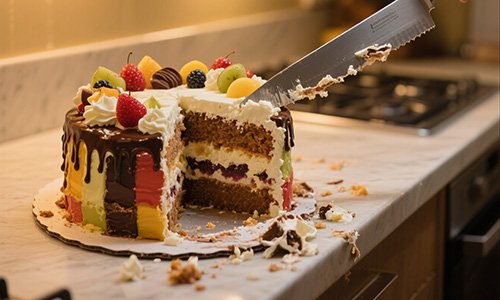
Slicing Les Misérables cake, whether it’s a les Misérables slice cake or preparing multiple Les Misérables slices, can be quite challenging due to its unique structure and texture. Home bakers and professionals alike often struggle with this delicate process.
One of the main problems is the sticky nature of the butter cream. The high butter content in the cream makes it prone to sticking to the knife, especially at room temperature. This not only messes up the slice but also causes the cream to be pulled out of the layers, ruining the cake’s appearance. The messy aftermath of attempting to cut the Patê à Bombe butter cream is a common frustration.
The multi-layer structure of Les Mis cake adds to the difficulty. The almond sponge is light and fluffy with many air pockets, while the cream layers are soft. When slicing, uneven force can cause the layers to separate. The top layer of the sponge might be lifted by the knife, leaving the bottom layers behind, resulting in a messy and unappealing les mis slice. Achieving clean cake slices is a true test of a baker’s technique.
The slightly crisp outer layer of the almond sponge is another challenge. Applying too much pressure when cutting can crush this crispy layer, creating crumbs. On the other hand, using too little force makes it hard to cut through, leading to the cake being pushed and deformed. The goal is to cut the cake without damaging the delicate almond sponge cake layers.
These slicing difficulties can be frustrating, especially when you want to present a perfect Les Misérables slice cake to guests or customers. For bakeries, a messy cut can impact the quality and perceived value of the dessert.
How Ultrasonic Cutting Solves These Problems
The high-frequency vibrations of the ultrasonic cutting machine also mean that less force is required to cut through the cake. This is crucial for preserving the delicate structure of Les Misérables cake. The gentle cutting action prevents the almond sponge from being crushed and the layers from separating, resulting in intact and visually appealing les mis slices. The technology allows for precise, clean cuts without deforming the cake.
Another advantage of using an ultrasonic cutter is the precision it offers. The ultrasonic blade can be controlled with great accuracy, allowing for consistent slice thickness. This is particularly important for bakeries and patisseries that need to present uniform les miserables slices to their customers. This precision ensures every customer gets the same high-quality product.
Moreover, the ultrasonic cutting process generates very little heat, which is beneficial for the butter cream in Les Misérables cake. Unlike traditional hot knives, which can melt the cream and cause it to ooze, the ultrasonic blade’s low heat impact keeps the cream in its original state, maintaining the cake’s texture and flavor. This makes it an ideal solution for cutting temperature-sensitive desserts.In addition, ultrasonic cutting knives have obvious advantages for cutting other foods, such as cheesecake, energy bars, Swiss rolls, ice cream cakes, and sushi.
In conclusion, slicing Les Misérables cake doesn’t have to be a daunting task. With the right knowledge of the cake’s structure and the use of advanced tools like ultrasonic cutting machines, you can achieve perfect Les Misérables slices every time. Whether you’re a professional baker or a home cook, these techniques will help you showcase the beauty of this classic Belgian dessert.
How Ultrasonic Cutting Works: A Technical Overview
To fully understand why an ultrasonic cake cutter performs so well with Les Misérables cake, it helps to look at the physics behind it. A typical ultrasonic food cutting system relies on three main components: an ultrasonic generator, a piezoelectric transducer, and a titanium or stainless-steel blade specially designed as a sonotrode.
The generator converts standard mains electricity into high-frequency electrical oscillations (usually 20–35 kHz). The transducer then transforms these electrical pulses into mechanical vibrations, which are amplified by the booster and transferred to the blade tip. The result is a blade that oscillates imperceptibly at a microscopic amplitude—typically 20–80 microns—creating a stress field at the cut interface. This localized stress breaks the food matrix apart with minimal lateral force, achieving what is often called “cold cutting.”
For layered cakes with buttercream, the vibratory action significantly reduces adhesion. The blade essentially “repels” the sticky cream while neatly separating the sponge layers. Additionally, because the ultrasonic energy is concentrated only at the immediate cutting zone, the surrounding cake remains at ambient temperature, preserving its delicate structure and taste. This principle also explains why ultrasonic blades are widely used for ultrasonic food cutting in industrial bakeries, extending beyond cakes to items like frozen logs and nut-filled bars.
Types of Ultrasonic Cutting Equipment for Bakeries
Not all ultrasonic cutters are the same. When considering ultrasonic cake slicing for a commercial kitchen or factory, you’ll encounter several configurations, each suited for different production scales and needs.
Handheld units – Compact and portable, these are ideal for small patisseries or chef stations where flexibility is key. They work well for ad-hoc slicing of Les Misérables cakes or delicate pastries, offering the same non-stick precision as larger systems.
Bench-top slitting machines – These systems secure the product on a conveyor or fixed table while a vertically mounted ultrasonic blade slices through it. They are common in mid-volume bakeries and can be programmed for slice thickness and cutting speed, ensuring every les mis slice comes out uniform.
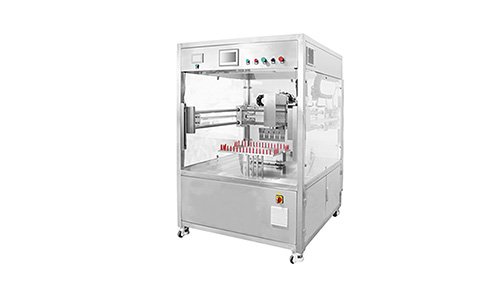
Automated in-line slicers – For high-volume production, fully automated ultrasonic food cutting lines integrate multiple blades and conveyors. These systems are capable of cutting whole cake slabs or frozen blocks into preset portions at rates of 60–120 cuts per minute, drastically reducing labor costs and portion variability. Hyusonic has implemented such lines for products like energy bars and cheesecakes, demonstrating how modular blade arrangements can adapt to different product sizes.
Choosing the right equipment depends on your throughput, space, and precision requirements. Even for artisanal bakeries, a bench-top ultrasonic machine can pay for itself quickly through reduced waste and neater presentation.
What Foods Can Ultrasonic Cutters Handle? Beyond Les Mis Cake
While this guide focuses on Les Misérables cake, an ultrasonic cake cutter is far from a single-purpose tool. The same non-stick, low-pressure cutting action makes it exceptionally versatile for a wide range of bakery and confectionery products, reinforcing the value of investing in ultrasonic food cutting technology.
Commonly processed items include:
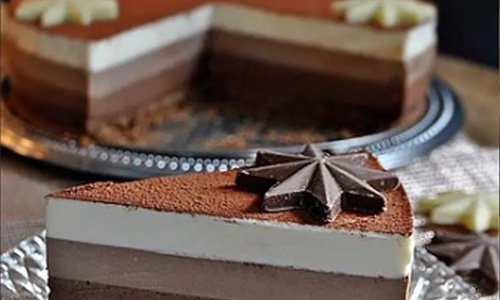
Cream-layered cakes – Black Forest, red velvet, tiramisu, and mousse cakes all benefit from clean, cream-sealed slices.
Cheesecakes and chilled desserts – Ultrasonic blades slice through dense, sticky cheesecake without crumbling the biscuit base or dragging the filling. Our cheesecake cutting guide dives deeper into this.
Frozen products – Ice cream cakes and frozen gateaux can be cut without thawing, preserving portion shape and reducing drip loss.
Confectionery bars – Energy bars, nougat, and marshmallow logs (as detailed in our marshmallow cutting article) are easily sectioned without compression or smearing.
Swiss rolls and roulades – The gentle vibration prevents the spiral from unrolling or cracking.
By extending your ultrasonic equipment to handle multiple products, you maximize asset utilization—a point frequently highlighted in the commercial bakeries we work with.
Hyusonic is a Chinese manufacturer specializing in ultrasonic cutting research. We provide full-wave and half-wave ultrasonic blades, handheld ultrasonic cutting machines, and fully automatic ultrasonic cutting machines. Additionally, we have undertaken numerous automated cutting production lines, such as the cutting of Snickers energy bars. Welcome to consult us about ultrasonic food cutting solutions.
Frequently Asked Questions About Ultrasonic Cake Cutting
Q: Can an ultrasonic cutter handle a Les Misérables cake with nuts or chocolate decorations on top?
A: Yes, the blade can cut through almonds, chocolate curls, and other decorations without shattering them, provided the amplitude is set correctly. The vibration essentially melts through chocolate peaks locally while leaving the rest intact.
Q: How thick can I set the slices?
A: Ultrasonic cutters can achieve slice thicknesses from 5 mm up to 50 mm with great repeatability. For Les Misérables cake, a standard 2–3 cm thick slice presents beautifully.
Q: Is the equipment hard to clean?
A: Not at all. Most blades are detachable and can be rinsed under running water. The generator housing is wipe-clean, and many models meet IP65 splash-proof standards. Refer to our food cutting solutions page for maintenance videos.
Q: Can I use the same machine for other products?
A: Absolutely. As mentioned in the food suitability section, the same ultrasonic cutter can slice cheesecakes, Swiss rolls, and even sticky confectionery bars—just swap blades or adjust parameters. This makes it a versatile tool in any bakery.
Q: What frequency is best for cake cutting—20 kHz or 40 kHz?
A: For most bakery items, a 20 kHz system provides the amplitude needed to cut through sponge and cream efficiently. Higher frequencies (30–40 kHz) are used for very thin or delicate items like fine chocolate sheets. Our team can recommend the right configuration based on your product range.