Precision Ultrasonic Welding Horns & Sonotrodes: FEA-Optimized Acoustic Tooling
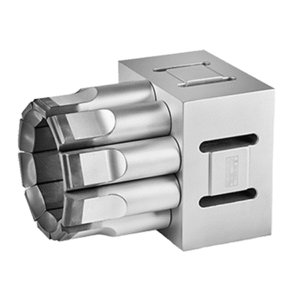
Custom-engineered sonotrodes machined to ±0.01mm tolerances. From aircraft-grade Titanium (Ti-6Al-4V) to hardened steel, we guarantee uniform amplitude distribution and zero frequency drift for your high-stakes assembly lines.
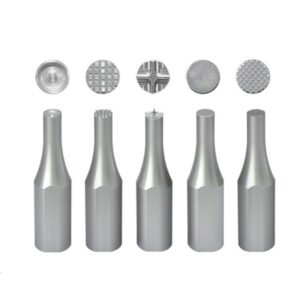
✔ Hardened tips for glass-filled materials
✔ FDA-compliant finishes for medical applications
✔ 3D simulation-optimized resonance profiles
Our 4-Step Sonotrode Design & Testing Process

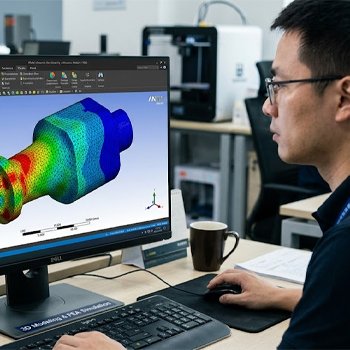
3D CAD & FEA Simulation
Every sonotrode design undergoes rigorous Finite Element Analysis (FEA) to simulate stress concentration and resonance profiles before manufacturing.
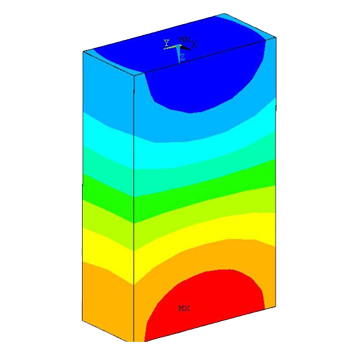
Amplitude Optimization
We calculate the exact amplitude gain required (from 25μm to 150μm) based on your polymer's acoustic impedance, ensuring a 100% uniform energy delivery across the weld face.
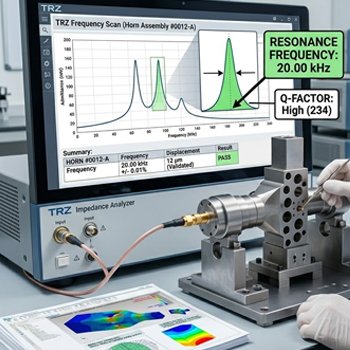
Impedance Analyzer Testing
Lorem ipsum dolor sit amet, consectetur adipiscing elit. Ut elit tellus, luctus nec ullamcorper mattis, pulvinar dapibus leo.
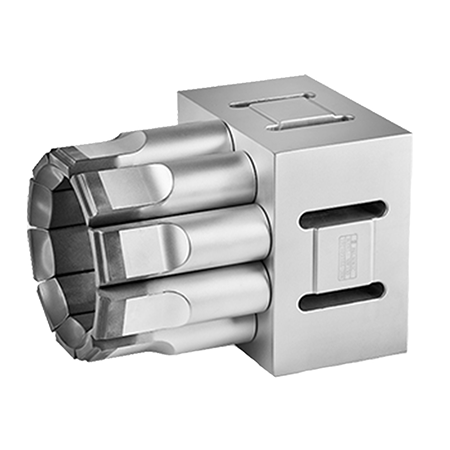
Precision Manufacturing
After FEA and frequency testing, the horn is CNC-machined to ±0.01mm tolerance and verified by laser measurement.
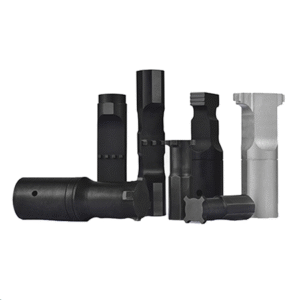
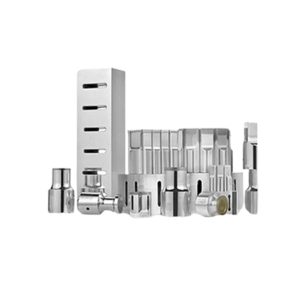
Hyusonic ultrasonic sonotrodes are custom-engineered with CAD designs to create optimal structures for diverse welding applications. Prior to manufacturing, each sonotrode undergoes rigorous stress analysis to ensure peak welding performance. We achieve accuracy in horn production using precision CNC machining and laser measurement technology. Our ultrasonic sonotrodes are versatile tools suitable for a wide range of ultrasonic processes, including ultrasonic plastic welding, ultrasonic metal welding, and ultrasonic cutting.
Industry-Proven Designs
Textile/fiber welding horns with serrated tips
Multi-point contact horns for automotive parts
Micro-welding tips for electronic components
Precision Engineering
CNC-machined to ±0.01mm tolerance
Resonant frequency matched to your transducer (15kHz/20kHz/28kHz/30kHz/35kHz/40kHz)
Professional Stress Analysis of Welding Horns for Uniform Amplitude Distribution
Material Science Expertise
Aircraft-grade titanium (Ti-6Al-4V) for high-amplitude applications
Hardened aluminum alloys for cost-sensitive projects
Custom steel alloys for specialized metal welding
Surface Treatment of Ultrasonic Sonotrode
Due to the high-intensity operation, ultrasonic welding horns are prone to wear, adhesion, corrosion, etc., which lead to performance degradation. Surface treatment can ensure the smooth and uniform surface of the welding horn, avoiding issues such as insufficient welding strength, workpiece deformation, or unsightly weld spots caused by surface defects.
Different surface treatment processes
- Plating process: Commonly, chrome or nickel is plated via electroplating or chemical methods, which can enhance the wear resistance and corrosion resistance of the welding horn, and improve the contact effect between the surface and workpieces.
- Coating process: Common ones include diamond-like carbon (DLC) coating, titanium nitride (TiN) coating, and polytetrafluoroethylene (PTFE) coating, which can significantly extend the service life of the welding horn and reduce material adhesion.
- Polishing treatment: Mechanical or electrolytic polishing reduces surface roughness (Ra≤0.2μm) to minimize material adhesion.
Application Of Ultrasonic Sonotrode
Ultrasonic welding horns can be used for plastic welding, metal welding, non-woven fabric welding, etc. In addition, they can also be applied to the cutting, embossing, riveting, punching, etc. of composite materials such as textile materials, rubber, and leather.
ultrasonic horn design guidelines
Our ultrasonic welding horns require personalized welding solutions to be evaluated based on specific product characteristics, followed by customized processing through mold opening. Only by designing the most suitable welding horns can the optimal welding effect be achieved.
- 1. Contact us to send your product drawings
- 2. Select Material & Frequency
- 3. Receive 24hour Quotation
Customer FAQs
What is an ultrasonic welding horn used for?
An ultrasonic welding horn (sonotrode) is a critical component in ultrasonic welding systems that transfers high-frequency vibrations to the workpiece, enabling precise bonding of plastics, metals, or textiles.
Why do ultrasonic welding horns have slots?
Slots are machined longitudinally into wide or complex horns to separate transverse frequencies. This ensures that the ultrasonic waves travel in a pure longitudinal direction, providing maximum and uniform vibration amplitude at the welding face.
What materials are ultrasonic welding horns made of?
Common materials:
Titanium (Ti-6Al-4V) – High strength, long lifespan
Aluminum 7075 – Lightweight, economical
Tool steel – For specialized metal welding
What is the lifespan of an ultrasonic horn?
Depending on the material and application, a well-designed Titanium sonotrode can last 2 to 5 years (up to 50 million cycles) in standard environments. Abrasive materials like 30% glass-filled nylon will reduce this lifespan.
Can ultrasonic horns be custom-designed?
Yes! Custom horns are CNC-machined to match:
Unique part shapes (e.g., medical device components)
Specific amplitude requirements
Machine compatibility (Branson, Herrmann, etc.)
Where to buy high-quality ultrasonic horns?
Look for manufacturers offering:
✅ ISO 9001 certification
✅ Free CAD design support
✅ Frequency testing reports