
Ultrasonic Welding or Heat Staking? The 2026 Decision Guide for Plastic, Electronics, and Hybrid Assemblies
Publish Data:2026.4.30 Author: Hyusonic
Most comparison articles make this topic sound too simple: ultrasonic welding is fast, heat staking is slow. That is partly true, but it is not how engineers actually choose a plastic joining process. In real production, the question is usually more practical: Will the joint seal? Will the PCB survive? Will the glass-filled plastic crack? Will the process leave enough data for quality control?
So instead of asking, “Which process is better?”, a better 2026 question is this: Do you need a molecular bond, or do you need a controlled mechanical lock?
Ultrasonic welding creates a bond between compatible thermoplastic parts by using high-frequency vibration, pressure, and localized frictional heat. Heat staking, on the other hand, uses controlled heat and force to reform a plastic boss or stud, locking another component in place. Once you understand that difference, the choice becomes much clearer.
The Fast Answer: Bond or Lock?
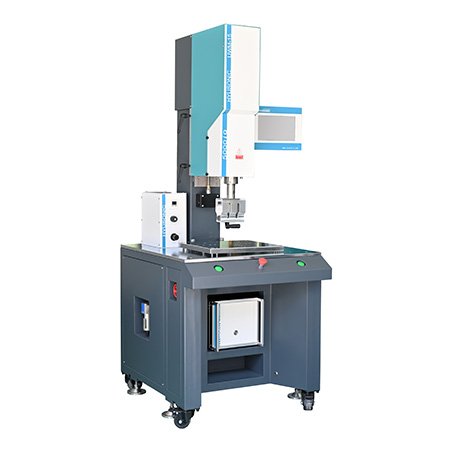
If two plastic parts must become one sealed structure, ultrasonic welding is usually the first process to test. This applies to plastic housings, medical disposables, filters, packaging parts, cosmetic components, and many automotive or appliance assemblies.
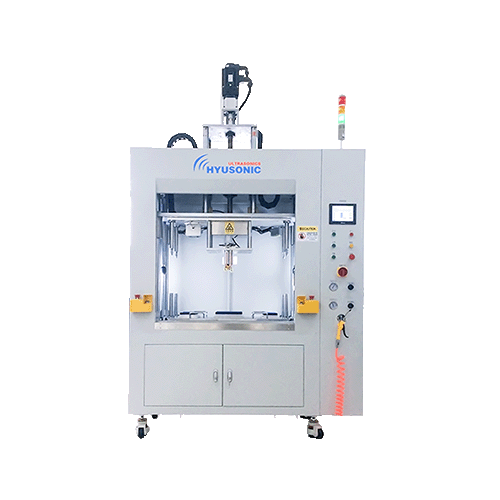
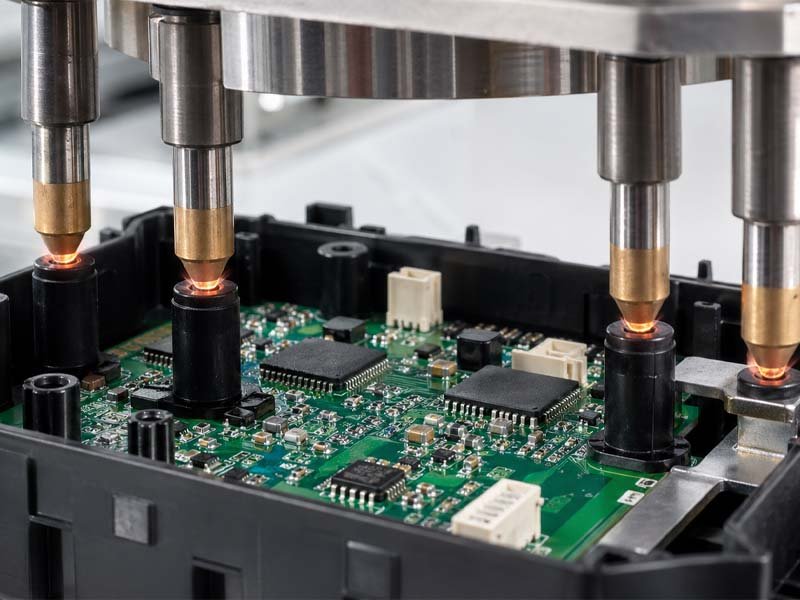
If the job is not really about sealing, but about holding a metal plate, PCB, sensor, insert, lens, decorative cover, or bracket in place, heat staking may be the better starting point. It does not try to weld two plastic surfaces together. Instead, it reshapes one thermoplastic feature into a rivet-like head.
That difference matters because many 2026 product designs are no longer simple plastic-to-plastic assemblies. They often combine plastics, metal inserts, electronic boards, glass-filled materials, sensors, and cosmetic outer surfaces. A fast weld is useful only when it protects the product’s real failure points.
When Ultrasonic Welding Is the Better Choice
Ultrasonic welding is usually stronger as a production choice when three things are true: the plastics are compatible, the joint is designed correctly, and the factory needs repeatable cycle data.
The biggest advantage is speed. A well-designed ultrasonic weld can be completed in less than a second, without glue, screws, solvents, or long curing time. For high-volume plastic assembly, that matters. But speed alone is not the full story. The real value is controlled energy delivery. The vibration energy is concentrated at the joint line, which means the melt starts exactly where the designer wants it.
A good example is the energy director. This small triangular or raised feature focuses ultrasonic energy and helps control melt flow, weld strength, flash, and cosmetic appearance.
Energy director in ultrasonic welding
Ultrasonic welding is also attractive when the process must be monitored. Modern ultrasonic welding systems can track parameters such as amplitude, energy, time, pressure, collapse distance, and weld depth. For medical devices, automotive components, and quality-sensitive products, that data is not just a machine setting. It becomes part of the quality record.

When Heat Staking Is the Better Choice
Heat staking becomes more attractive when the product contains mixed materials or sensitive parts. It is widely used for plastic-to-metal retention, PCB fixing, sensor housings, decorative components, automotive interior parts, and electronic modules.
The reason is simple: heat staking does not rely on high-frequency vibration. Instead, it applies heat and pressure locally to a plastic boss. That can be safer when nearby electronics, solder joints, fine conductors, or fragile sensors might be affected by vibration.
It also gives engineers more freedom with dissimilar materials. For example, a plastic housing can mechanically capture a metal bracket, a circuit board, or a decorative cover. The parts do not need to be chemically compatible in the same way that two ultrasonically welded plastics do.
Heat staking is also worth considering for glass-filled engineering plastics. Filled materials can be difficult in ultrasonic welding because fibers change energy transmission, melt behavior, and crack risk. Heat staking gives engineers another way to form and retain the plastic without forcing the entire joint to behave like a clean plastic weld.
The Material Question: Why Plastic Type Changes Everything
Many buyers search for “can PP be ultrasonically welded?” or “ultrasonic welding polypropylene” because polypropylene is common, affordable, and chemically useful. The answer is yes, but PP is not as forgiving as ABS or polystyrene. It often requires better joint design, sharper energy concentration, and tighter process control.
Material compatibility is one of the most overlooked points in ultrasonic welding. Two plastics may look similar, but that does not mean they weld well together. Resin family, melting temperature, stiffness, fillers, moisture, colorants, and part geometry all affect the result.
How to choose ultrasonic welding parameters
Herrmann guide to weldable plastics
This is also why a sample test is often more valuable than a generic chart. A welding chart can tell you what may work. A tested sample tells you what survives your real part design, your resin grade, your wall thickness, and your required load direction.
What Changed in 2026?
The market is moving toward hybrid assemblies. More products now combine plastic housings, metal conductors, lightweight structures, sensors, battery-related components, and medical-grade materials. That shift makes process selection more important.
Recent research on ultrasonic welding has focused more on thermoplastics, fiber-reinforced composites, and metal-polymer hybrid joining. At the same time, heat staking research is also becoming more advanced, including automated visual inspection and studies on heat-staked additively manufactured polymer parts.
2025 review on ultrasonic welding for hybrid materials
AI-based heat staking inspection study
2026 PA12 heat-staking research
This means the old “fast vs slow” comparison is no longer enough. The real comparison is becoming traceable bonding vs controlled forming. Ultrasonic welding wins when a clean, fast, data-tracked plastic bond is required. Heat staking wins when the product needs low-vibration retention, mixed-material joining, or safer assembly around sensitive components.
Practical Selection Guide
Choose ultrasonic welding when you need:
- A sealed plastic-to-plastic joint
- Fast cycle time for mass production
- No screws, adhesives, or solvents
- Clean appearance and repeatable weld strength
- Process data such as energy, amplitude, force, or collapse distance
Choose heat staking when you need:
- Plastic-to-metal or plastic-to-PCB retention
- Lower vibration around electronics
- Forming of plastic bosses or studs
- Better control on large or multi-point assemblies
- A practical method for mixed-material parts
For many projects, the safest approach is not to decide from a chart. Send the part drawing, resin information, sample photos, and quality requirements to an application engineer. The best process is the one that passes the real test: strength, sealing, appearance, cycle time, and scrap rate.
FAQ
Is heat staking stronger than ultrasonic welding?
Not always. Ultrasonic welding creates a fused plastic bond, while heat staking creates a mechanical lock. Strength depends on material, joint geometry, boss design, loading direction, and whether the part needs sealing.
Can ultrasonic welding damage electronics?
Yes, in some designs. Ultrasonic vibration may be risky near solder joints, fine conductors, sensors, or fragile internal structures. In those cases, heat staking is often safer.
Can polypropylene be ultrasonically welded?
Yes, polypropylene can be ultrasonically welded, but it usually needs better energy concentration and tighter parameter control than easier amorphous plastics.
Is “ultra sonic welding” the same as ultrasonic welding?
Yes. Some buyers search “ultra sonic welding,” “sonic welding,” or even “ultasonic welding,” but in plastic assembly these usually refer to ultrasonic plastic welding.
Final Takeaway
Ultrasonic welding and heat staking are not competing versions of the same process. They solve different assembly problems. Ultrasonic welding is usually the better choice for fast, clean, traceable plastic-to-plastic bonding. Heat staking is usually better for gentle, controlled retention of metal parts, PCBs, sensors, or mixed-material assemblies.
For Hyusonic customers, the real question is not simply which machine to buy. It is what the joint must do after production: seal, hold, protect, survive vibration, or create a recordable process. Once that is clear, the right joining method becomes much easier to choose.