

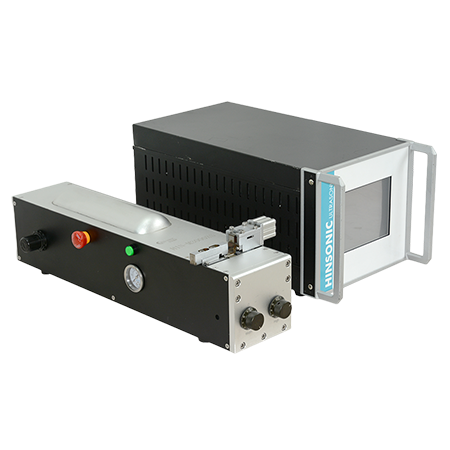
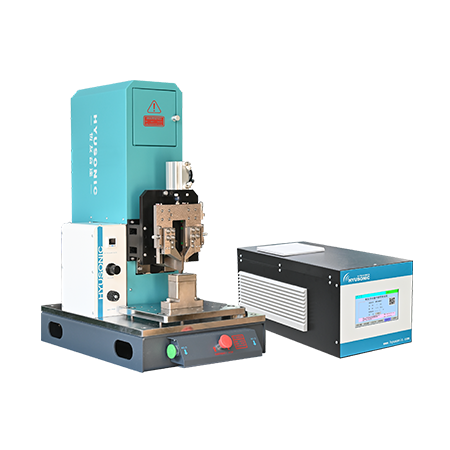
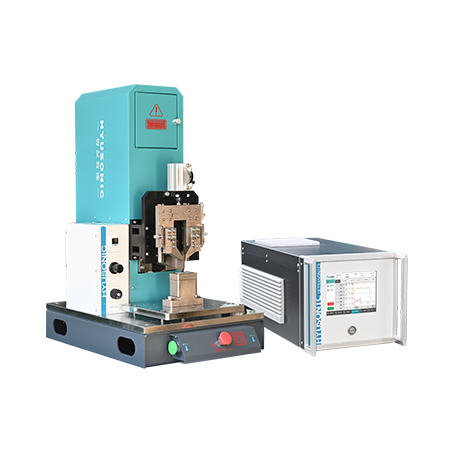
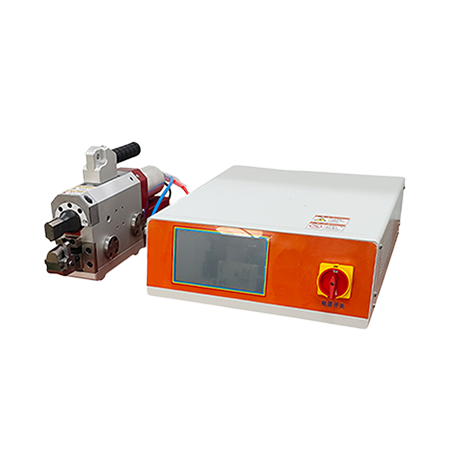
Ultrasonic Wire Welder ST series
-
Digital Ultrasonic System
Features a digital generator with automatic frequency tracking and precise amplitude control (10% to 100%) for zero-oxidation solid-state bonds. -
Full-Series Modular Design
Supports quick-change sonotrodes (welding horns) and tool nests, scaling from 0.5 mm² to 50 mm² wire sums without structural rebuilding. -
CE & ISO 9001 Certified
Fully compliant with IPC/WHMA-A-620, IATF 16949, and CE (EU Machinery Directive) for high-integrity, safety-critical automotive environments. -
Quality Control Window
Monitors dynamic weld height, energy limits (1ws–9999ws), and time thresholds (0.01s–10s) to guarantee high process capability (Cpk) values.
description
The ST Series ultrasonic wire splicer is engineered for high-performance non-ferrous metal wire splicing, employing advanced 20 kHz acoustic technology for fast, precise, and repeatable solid-state cold welding. Featuring extremely low post-weld contact resistance (under 5% resistance increase compared to the raw copper conductor) , this ultrasonic wire welding machine is the ideal choice for demanding automotive zonal architectures and EV lithium-ion battery pack connections .
Capable of completing a high-strength metallurgical joint in under 1.0 second , the ST Series excels in copper-to-copper, aluminum-to-aluminum, and dissimilar copper-to-aluminum hybrid splicing. It offers flexible customization of sonotrode (welding head) geometries, peak generator outputs (up to 10 kW) , and pneumatic clamping pressures to match specific wire cross-sections. The modular pneumatic actuator design ensures tool changeovers can be completed in under one minute, maximizing production uptime.
Why choose ultrasonic wire harness welding machine ST series
Intelligent Monitoring System
Programmed with dual-mode process control (Time and Energy) and micro-displacement height detection. In compliance with USCAR-45 and USCAR-38 standards , the system measures pre-weld and post-weld heights to identify missing strands or added insulation down to 3% to 5% of the total cross-sectional area, automatically aborting faulty cycles before down-line assembly.
Stable Ultrasonic System
Operating through transverse high-frequency vibrations rather than thermal melting, the ST Series breaks surface oxides on contact conductors. This triggers atomic-level lattice diffusion and molecular bonding without heat distortion, preserving the crystalline structure of the metal and preventing heat damage to delicate wire insulation.
Price & Service
As a dedicated manufacturer, Hyusonic integrates premium global components (including Siemens and SMC pneumatics) to match first-tier brand performance at competitive prices. Every machine is backed by comprehensive feasibility checks, free lab trial welding, microsection analysis, pull-testing reports, and 24/7 technical support .
Application-Specific Horn & Fixture Design
To handle complex wire paths and tight physical spaces in EV battery packs, the ST Series offers customized sonotrodes and anvils . Our engineering team provides custom-tailored tooling for diverse configurations, supporting everything from ultra-fine signal wires (0.5 mm²) to heavy-gauge battery cables (up to 50 mm²) , tinned copper braids, and flexible busbars .


Sustainable, Solder-Free Process
The solid-state cold welding process requires no solder, flux, crimp sleeves, or shielding gases. By eliminating consumables, it reduces operating costs by 30% to 50% while operating with 20 times less energy than resistance welding. It produces zero fumes, zero sparks, and zero residue, easily meeting strict ISO 14001, automotive, and aerospace cleanliness standards.
Technical data
| Parameter | Specifications/Range | |
|---|---|---|
| Technical Data | Machine Power | 800W / 1200W / 2500W / 3000W / 4000W / 5000W / 6000W / 10000W |
| System Frequency | 20kHz | |
| Power Input | ① AC220V ±10%, 50Hz/60Hz ② AC380V ±10% | |
| Weight | 55KG / 160KG | |
| Welding (Range/Precision) | Energy Range | 1ws – 9999ws |
| Welding Time | Range: 0.01s – 10s | |
| Dimensions | Frame (L×W×H) | 400mm × 680mm × 1280mm |
| Generator (W×D×H) | 265mm × 580mm × 255mm |
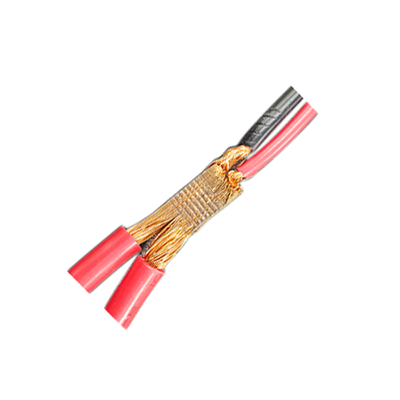
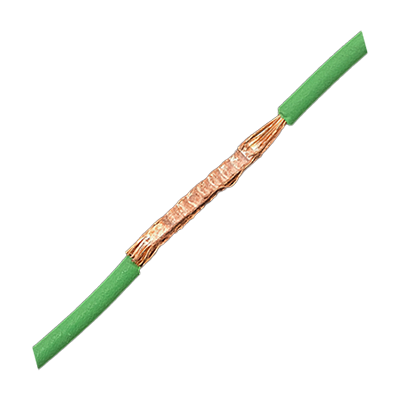
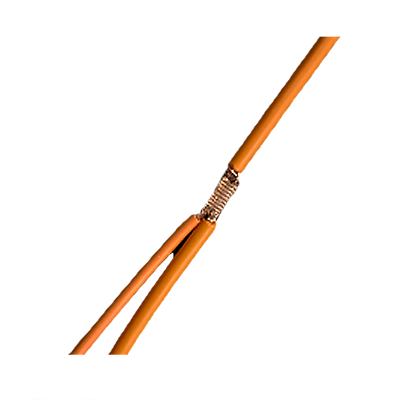
welding cases
Get Your Free Splicing Lab Validation Report
Before you finalize your process, send your wire and terminal samples to Hyusonic’s Advanced Joining Laboratory. Our process engineers and metallurgists will conduct a complete diagnostic check, including:
Mechanical Pull-Testing: Destructive tensile shear and peel-force tests on Instron/Zwick equipment to verify the joint exceeds 85% of the parent wire’s tensile limit.
Metallographic Microsection Analysis: Optical microscopy to confirm strand integration and a compacted area ratio of over 95% with zero internal voids.
4-Wire Micro-ohm Resistance Measurement: Testing with Keysight 34420A micro-ohm meters to guarantee connection resistance is maintained under 2.0 micro-ohms.
Contact our engineering specialists today to receive your customized weld recipe and lab report free of charge.

Customer FAQs
Why choose ultrasonic welding over resistance welding for copper harnesses?
Ultrasonic avoids heat-affected zones (HAZ), reduces energy use by 40%, and works with AC220V input (vs heavy 3-phase for resistance).
Ultrasonic welding has lower resistance, and most industries use copper wire to distribute electricity, which requires conductive properties.
How to weld multi-strand wires without fraying using ultrasonic splicers?
Use serrated anvils, apply 2000N–4000N clamping force, and set short weld times (0.1s–0.3s) to fuse strands uniformly.
How to validate weld strength in medical-grade wire harnesses?
Perform pull tests (≥80% base material strength), microsection analysis, and comply with ISO 13485 for hermetic seals.
How does ultrasonic wire harness welding improve conductivity compared to crimping?
Ultrasonic welding creates molecular bonds without oxidation, ensuring 99%+ conductivity. Crimping risks micro-gaps, leading to resistance buildup over time.
What is the maximum wire gauge an ultrasonic wire splicer can handle for automotive harnesses?
High-power machines (e.g., 4000W–6000W) reliably splice wires up to 10 AWG. For precision work (e.g., 24 AWG), use systems with 20kHz–40kHz frequency and 0.01mm displacement control.
Can ultrasonic wire splicers join copper and aluminum wires for hybrid harnesses?
Yes! Use 30kHz–35kHz frequency and pressure settings (e.g., 3000N) to fuse dissimilar metals without flux or solder.