
What Is Ultrasonic Welding Used For? Applications and Benefits Explained
Publish Data:2025.12.03 Author: Hyusonic
How Ultrasonic Welding Works
Ultrasonic welding joins materials using high-frequency vibrations—typically between 15 to 70 kHz—that generate frictional heat at the interface. This heat softens the materials, allowing their molecules to fuse and create a strong molecular bond without melting the entire part.
Basic Principle
- High-frequency vibration is applied to the materials.
- Vibrations produce frictional heat at the joint.
- Heat causes molecular chains to interlock and bond.
- The bond solidifies as vibrations stop and material cools.
Key Components
| Component | Function |
|---|---|
| Generator | Converts electrical energy to high-frequency AC current |
| Converter | Changes electrical energy into ultrasonic mechanical vibrations |
| Booster | Amplifies vibration amplitude |
| Horn (Sonotrode) | Contacts parts and delivers vibration energy |
| Anvil | Supports the parts, providing a stable base for welding |
Ultrasonic Plastic Welding vs Ultrasonic Metal Welding – Key Differences
Ultrasonic welding works differently for plastics and metals, mainly due to their distinct physical properties. Here’s a quick comparison of their key differences:
| Feature | Ultrasonic Plastic Welding | Ultrasonic Metal Welding |
|---|---|---|
| Frequency Range | 20 – 40 kHz | 15 – 30 kHz |
| Power Requirements | Lower power (10–1000 watts) | Higher power (1000+ watts) |
| Heat Generation | Friction melts plastic surfaces | Friction creates localized metal bonding |
| Joint Characteristics | Hermetic, clean, often invisible | Strong, electrically conductive joints |
| Typical Materials | Thermoplastics (ABS, PC, PP, etc.) | Metals like aluminum, copper, nickel |
| Applications | Consumer electronics, packaging, medical devices | Battery tab welding, wire harnessing, aerospace parts |
| Tooling Wear | Minimal | Higher due to metal hardness |
| Cycle Time | Very fast (0.1–2 seconds) | Slightly longer, varies by metal thickness |
For deeper insights into metal joining techniques, check out our detailed guide on ultrasonic metal welding.
Understanding these differences helps select the right ultrasonic welding method for your specific application—whether it’s delicate plastics or tough metals.
Top 10 Industries That Rely on Ultrasonic Welding
Ultrasonic welding is a go-to joining method across many industries thanks to its speed, reliability, and clean process. Here are the top 10 sectors depending on ultrasonic welding this year:
Automotive & Electric Vehicles (EV)
From battery tab welding in EV batteries to sensors and lighting components, ultrasonic welding plays a critical role in building lightweight, safe, and efficient vehicles.
Medical & Healthcare
It’s widely used in manufacturing catheters, filters, IV bags, and surgical instruments where strong, hermetic seals and cleanroom compatibility matter most.
Consumer Electronics
Smartphones, wearables, and lithium-ion battery pouch cells often rely on ultrasonic welding for precise assembly without damaging sensitive components.
Packaging
Blister packs, clamshell containers, and food & beverage packaging benefit from ultrasonic sealing that’s fast, energy-efficient, and leaves no residue.
Aerospace & Defense
Ultrasonic welding ensures high-strength joins for lightweight composites and sensitive electronic assemblies critical for aerospace and defense applications.
Appliances & White Goods
From washing machine control panels to small household appliances, this method provides fast, durable bonding without extra materials.
Textiles & Nonwovens
Filters, hygiene products, and other nonwoven materials are ultrasonically welded for strong, clean seams that maintain product integrity.
Toys & Sporting Goods
Manufacturers use ultrasonic welding to assemble plastic parts quickly and securely, keeping quality and safety standards high.
Wire Harnessing & Electrical Components
Ultrasonic welding is ideal for joining wires, connectors, and terminals, ensuring reliable electrical connections without solder or adhesives.
Check out our selection of advanced ultrasonic metal welder tube sealers designed for high-precision electrical welding.Emerging Industries: Hydrogen Fuel Cells & Advanced Composites
Growing demand for clean energy and lightweight materials is pushing ultrasonic welding into hydrogen fuel cell assembly and next-gen composites fabrication.
These industries leverage ultrasonic welding for its speed, strength, and ability to join tricky materials. Whether assembling EV batteries or packaging sensitive medical devices, ultrasonic welding remains a key process fueling innovation in 2026.
Common Materials Successfully Joined
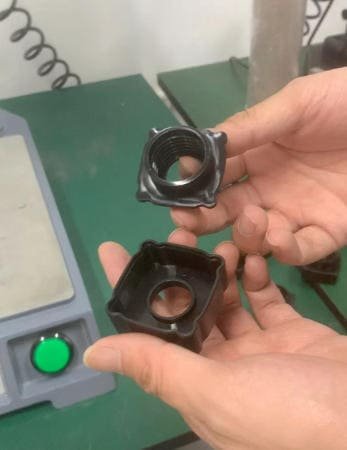
Ultrasonic welding works best with a variety of thermoplastics like ABS, polycarbonate (PC), polypropylene (PP), polyethylene (PE), and PVC. These plastics respond well because the ultrasonic vibrations melt the material locally without affecting the whole part. It’s important to note the difference between amorphous plastics (like ABS and PC), which soften gradually, and semi-crystalline plastics (like PP and PE), which have a sharper melting point—this affects how they weld for strong, consistent joints.
On the metal side, ultrasonic welding commonly joins aluminum, copper, and nickel, especially useful for delicate components like battery tabs and foils in lithium-ion cells. Metals require more precise control due to their higher melting points but offer solid, conductive bonds.
While ultrasonic welding can join dissimilar materials such as plastic-to-metal, this has some limitations. The process generally demands compatible surfaces and joint designs to ensure a reliable bond without weakening the parts.
For a detailed look at the materials and how they behave during ultrasonic welding, check out our guide on what materials can be ultrasonically welded.
Specific Part Examples You See Every Day
Ultrasonic welding quietly powers many everyday items you use without even noticing. For example, car key fobs and dashboards rely on ultrasonic welding for secure, clean assembly. Tail lights in vehicles are often welded this way to ensure durability and weather resistance.
In your wallet, credit cards owe their layered structure to ultrasonic welding, just like blister packaging that keeps your medicine safe and fresh. Medical items such as fluid bags and dialyzers use ultrasonic welding to create airtight, reliable seals critical for patient safety.
In the fast-growing battery market, ultrasonic welding is essential for joining lithium battery pouch cells and cylindrical tabs, providing strong electrical connections without damaging sensitive components. Even household appliances benefit—washing machine control panels are commonly assembled using ultrasonic welding for its speed and neat finish.
If you need advanced metal welding solutions for battery tabs or similar applications, consider our high-quality ultrasonic metal welder machines designed for precision and reliability.
Advantages – Why Companies Choose Ultrasonic Welding
Ultrasonic welding is popular because it offers clear benefits that save time and money while ensuring quality:
- No consumables needed: No glue, screws, or solvents mean lower costs and less mess.
- Fast cycle times: Welding completes in 0.1 to 2 seconds, boosting production speed.
- Clean, aesthetic joints: Joints are strong and neat with no visible marks or flash.
- Energy efficient & eco-friendly: Uses less power than other welding methods, cutting energy costs and environmental impact.
- Strong, hermetic seals: Essential for medical devices and battery packs to prevent leaks and contamination.
- Cleanroom compatible: Ideal for sterile and sensitive environments in healthcare and electronics.
| Key Advantage | Why It Matters | Examples |
|---|---|---|
| No consumables | Cost-effective, less waste | Medical bags, automotive parts |
| Ultra-fast welding | High throughput | Consumer electronics, EV batteries |
| Clean joints | Better product appearance | Packaging, toys |
| Energy efficient | Lower operational costs | Appliances, plastics |
| Hermetic seals | Safe and reliable products | IV bags, lithium battery cells |
| Cleanroom suitability | Maintains product sterility | Surgical instruments, sensors |
These advantages make ultrasonic welding a top choice across industries. For more details on how ultrasonic welding compares with other methods, check out our advantages and disadvantages of ultrasonic welding page.
Limitations & When NOT to Use Ultrasonic Welding
While ultrasonic welding is highly efficient and versatile, it does have some limitations you should consider before choosing it for your project.
Material Compatibility: Not all materials work well with ultrasonic welding. For example, some metals with high thermal conductivity or very thick plastic parts may not weld cleanly or reliably. Also, certain plastic blends or filled materials can be challenging to bond.
Part Geometry and Joint Design: Ultrasonic welding requires specific joint designs for optimal results—like flat or slightly curved surfaces and thin sections. Complex shapes, very thick parts, or joints with uneven gaps may lead to weak bonds or inconsistent welds.
Initial Tooling Cost: The upfront cost for ultrasonic welding tooling and equipment can be high. However, this initial expense is usually offset quickly by fast cycle times and low operating costs in high-volume production runs.
If your materials or design don’t suit ultrasonic welding, alternate joining methods like adhesives, mechanical fastening, or laser welding might be better. Still, if you’re producing at scale with the right setup, ultrasonic welding remains one of the cleanest and most reliable options available. For equipment options tailored to your needs, explore our range of advanced ultrasonic welding systems.
Future Trends in Ultrasonic Welding (2026–2030)
Looking ahead to 2026 through 2030, ultrasonic welding is set to get even smarter and more precise. Servo-driven systems are becoming a game changer, offering ultimate control over vibration amplitude and force for consistently perfect welds—ideal for delicate or complex parts. Continuous welding methods, like reel-to-reel welding for battery foils, will speed up production lines, especially important as electric vehicle (EV) battery demand ramps up.
Another major trend is tighter integration with Industry 4.0 technologies. Real-time process monitoring and data analytics will help manufacturers optimize weld quality, reduce downtime, and troubleshoot faster. This digital link will make ultrasonic welding even more reliable and easier to scale.
Plus, ultrasonic welding will see growing use in the hydrogen economy and lightweight composite manufacturing. These emerging sectors require clean, strong, and precise joining methods. Ultrasonic welding fits the bill perfectly, especially for fuel cells and advanced materials where traditional joining just doesn’t cut it.
For those looking to invest in future-ready welding equipment, exploring advanced components like an ultrasonic system generator or a precision ultrasonic horn can make a big difference in adapting to these trends.
Explore our range of ultrasonic system generators and finely tuned ultrasonic horns to future-proof your welding operations.
How to Know If Ultrasonic Welding Is Right for Your Project
Choosing ultrasonic welding depends on several key factors. Here’s a quick 7-question checklist to help decide if it fits your project needs:
What materials are you joining?
Ultrasonic welding works best with thermoplastics and certain metals like aluminum and copper. If your materials don’t fit, this may not be the best option.
What’s your production volume?
Ultrasonic welding shines in medium to high volumes due to its fast cycle times and repeatability. For very low quantities, tooling costs might not justify the investment.
How critical is joint strength?
If you need strong, hermetic, or clean seals—like in medical devices or EV batteries—ultrasonic welding offers reliable, durable bonds.
Are you sensitive to cosmetics and cleanliness?
This process leaves no visible marks or residues, making it ideal for consumer electronics, packaging, and healthcare products.
What’s the part geometry or size?
Parts need to have appropriate joint designs and accessible surfaces for the ultrasonic horn and anvil to work effectively.
Do you need fast cycle times?
Ultrasonic welding often finishes in less than 2 seconds per joint, making it great for high-speed production lines.
Is environmental impact a concern?
Ultrasonic welding requires no glue or solvents, so it’s a clean, energy-efficient choice.
Thinking through these questions will help you figure out if ultrasonic welding offers the right combination of speed, strength, and finish for your project. For more detailed guidance on selecting the best welder system, check out our guide on how to choose the right welder.