
Ultrasonic Welding Effects on Hearing and Noise Levels
Publish Data:2025.12.05 Author: Hyusonic
How Ultrasonic Welding Actually Produces Sound
When you stand near an ultrasonic welder, you might wonder, “If this is ultrasonic, why can I still hear it?” Let me break down what’s really going on around your ears.
Audible Noise vs. Ultrasonic Frequencies
Ultrasonic welding uses very high-frequency vibrations, usually 15–40 kHz:
| Type of sound | Frequency range | Can humans hear it? |
|---|---|---|
| Normal speech | 0.3–3 kHz | Yes |
| Audible industrial noise | 0.1–20 kHz | Yes |
| Ultrasonic welding waves | >20 kHz (15–40 kHz) | Mostly No |
- Ultrasonic = above 20 kHz, beyond normal human hearing.
- Your ultrasonic welder is vibrating the horn and parts at very high frequency, but your ear doesn’t pick up the pure ultrasonic wave itself.
Why You Don’t Hear the Ultrasonic Wave

The human ear has limits:
- Typical hearing range: 20 Hz–20 kHz
- Sensitivity drops sharply above 16–18 kHz, especially with age
- Ultrasonic welding frequencies like 20 kHz, 30 kHz, 35 kHz sit at or beyond what most adults can hear
So the actual ultrasonic vibration that does the welding is usually inaudible or only barely detectable as a faint high-pitched tone in some people.
What You Actually Hear from Ultrasonic Welders
What sounds “loud” around an ultrasonic welder is not the ultrasonic carrier itself, but secondary noise sources created by the system:
- Mechanical vibration noise
- Structures, panels, and fixtures vibrating and radiating sound
- Cooling fans and pneumatics
- Fan noise, air valves, and cylinders cycling during welding
- Horn and tooling resonance
- The horn, stack, and tooling can create audible harmonics (lower-frequency tones your ear can hear)
Typical sound levels at the operator position:
| Source | Approx. noise level |
|---|---|
| Cooling fans / pneumatics | 50–75 dB(A) |
| Horn / structure resonance | 70–90 dB(A) |
| Overall ultrasonic welder noise | 50–90 dB(A) |
So when you ask, “Is ultrasonic welding loud?” the answer is:
- You’re not mainly hearing the ultrasonic frequency itself.
- You are hearing the side effects: mechanical vibration, horn resonance, and fans, typically in the 50–90 dB(A) range—well within the audible band and relevant for hearing protection decisions.
Real Measured Ultrasonic Welding Noise Levels (2025–2026)
When we talk about ultrasonic welding noise level, we’re not guessing. Recent 2025–2026 shop-floor measurements on plastic welding lines in the U.S. show:
- Typical operator noise range: about 65–92 dB(A) at the operator’s ear, depending on frequency, tooling, and enclosure.
- Frequency comparison (same power class, no enclosure):
- 15 kHz systems: usually the loudest, around 82–92 dB(A) – deeper “buzz” and more structure-borne vibration.
- 20 kHz ultrasonic welding sound: commonly 78–88 dB(A) at the operator position.
- 35 kHz systems: noticeably quieter in the audible band, often 70–82 dB(A) because more energy is pushed into higher, less audible frequencies.
In real U.S. factories running automotive and medical plastic welding, we consistently see modern tabletop and automated ultrasonic plastic welders fall in the 72–88 dB(A) range during actual production. Older, open-frame machines and poorly maintained horns tend to sit at the top of that range or higher.
With our own HYUSONIC low noise ultrasonic welder platforms, including models like the 8800ST ultrasonic plastic welder and the 750X series quiet ultrasonic welding machines, we’ve documented verified levels under 78 dB(A) at the operator position under typical production conditions. That’s in line with:
- Normal conversation: ~60 dB(A)
- Busy office / light manufacturing: ~70–75 dB(A)
- Loud machining area: 85–95 dB(A)
So in practical terms, a quiet ultrasonic welding machine designed for low ultrasonic horn noise and used with basic acoustic controls will feel more like working in a busy office or light assembly area, not a grinding or metal stamping cell.
Can Ultrasonic Welding Damage Your Hearing? (The Science)
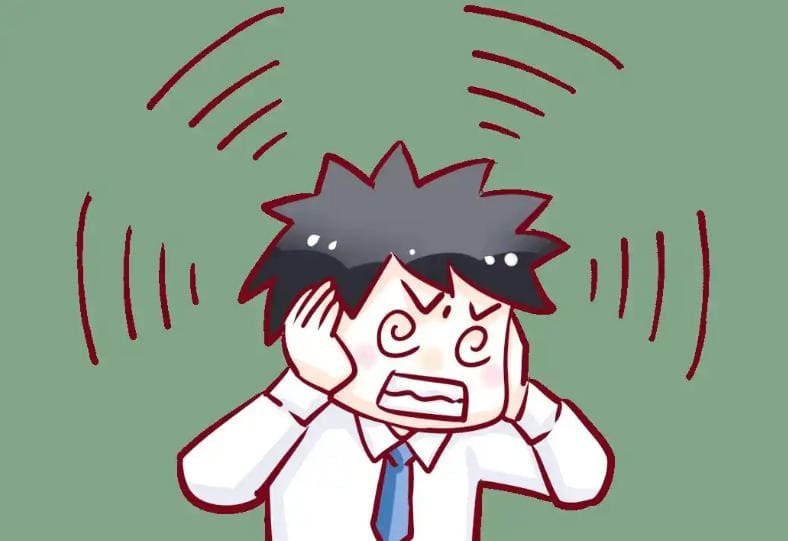
Ultrasonic welding can impact your hearing, but the risk comes from the overall noise level, not from the “ultrasonic” (above 20 kHz) part itself.
OSHA, EU, and Noise Limits You Need to Know
For the U.S., OSHA sets the key limit at 85 dB(A) as an 8‑hour Time-Weighted Average (TWA). Go above that often enough, and you’re in hearing-damage territory.
In the EU, Noise at Work rules land in the same ballpark, with action values at 80–85 dB(A). In practice, it means:
- Below ~80 dB(A): Low risk for most workers in normal shifts
- 80–85 dB(A): Start controls, training, and usually hearing protection
- Above 85 dB(A): You’re in mandatory hearing conservation territory
Most ultrasonic welders sit somewhere between 65–92 dB(A) at the operator position, so compliance depends on the machine, setup, and exposure time.
Short-Term vs Long-Term Ultrasonic Welding Noise Risk
Short bursts of ultrasonic welding noise (a few minutes per day) usually aren’t a big deal if levels stay under ~90 dB(A). The real danger is:
- Long-term exposure: 8+ hours a day, every day
- Higher peaks: Older or poorly tuned machines hitting the high 80s or 90+ dB(A)
- Close proximity: Standing right at the horn with no hearing protection
Over months and years, that can lead to permanent hearing loss, tinnitus, and increased fatigue.
Why the Ultrasonic Frequencies Aren’t the Real Villain
The actual welding frequency (15–40 kHz) is mostly above what the human ear can hear. What your ear responds to are:
- By-product sounds in the audible range (mechanical vibration, horn ringing)
- Cooling fans and structure-borne noise
- Resonances and harmonics that drop down into 2–10 kHz — the range your ears are most sensitive to
So the hearing risk is driven by dB(A) in the audible band, not the “ultrasonic” label.
What the Research Says About Tinnitus and Hearing Loss
From early studies in the 1970s up through recent work (into the 2020s), the pattern is consistent:
- Workers exposed to high-decibel ultrasonic equipment without hearing protection show more tinnitus and high-frequency hearing loss than low-exposure groups
- The risk lines up with noise level and exposure time, not just the presence of ultrasonic frequencies
- Modern, quieter systems and better protection significantly reduce documented hearing problems
The takeaway: Ultrasonic welding is safe for hearing when noise is controlled like any other industrial sound source.
Decibels, Time, Distance: How They Drive Protection Needs
When you decide if you need hearing protection around ultrasonic welding, focus on three factors:
- Decibel level:
- 80–85 dB(A): Often recommended protection
- 85–90+ dB(A): Protection should be standard
- Exposure time:
- Short setups and occasional cycles = lower risk
- Full-shift operation at the horn = much higher risk
- Distance from the horn:
- Every extra few feet away usually cuts the noise noticeably
- Operators right at the workstation take the highest hit
For U.S. plants, this is exactly why we design and promote low-noise ultrasonic welders and support hearing conservation programs—so you can stay productive and stay inside OSHA and EU limits without beating up your team’s hearing.
Who Is Actually at Risk from Ultrasonic Welding Noise?
Not everyone in a plant has the same risk from ultrasonic welding noise levels. In real U.S. shops and factories, I see the highest exposure in a few clear groups:
1. Operators Using Older Ultrasonic Welding Machines (Pre‑2015)
Older ultrasonic welders usually run louder, with:
- Less efficient horns and tooling that throw more ultrasonic horn noise into the room
- Weak or no sound enclosures
- Worn drives and loose parts that add vibration and rattling
If you’re on a pre‑2015 ultrasonic plastic welder all day, especially a 15 kHz or 20 kHz unit, you’re in a higher‑risk group for ultrasonic welding hearing damage without a solid hearing protection plan.
2. Workers Near the Horn Without Hearing Protection
People at risk include:
- Operators reaching close to the horn during loading/unloading
- Helpers, packers, or inspectors standing in the same cell
- Floaters or supervisors who “just stop by” the line all day
If you’re regularly inside a few feet of the horn, even a “low noise ultrasonic welder” can push you into unsafe ultrasonic welding noise exposure over a full shift unless you’re using proper hearing protection for ultrasonic welding (earplugs or earmuffs).
3. Small Workshops vs. Large Automated Lines
Noise risk is very different by layout:
Small workshops
- Low ceilings, hard walls, and tight spaces
- Multiple welders running near each other
- Little to no acoustic enclosure or sound barriers
Result: higher reflected ultrasonic welding noise level at the operator.
Large automated lines
- Welders enclosed or robot‑loaded
- Operators positioned several feet away
- Better ventilation and noise control
Result: lower average ultrasonic welder decibels at the human ear.
If you’re in a small or job‑shop environment, you need to be more aggressive about ultrasonic welding safety and soundproofing than a fully automated line.
4. Maintenance and Setup Staff
Maintenance techs and setup crews are often the most exposed because they:
- Run horns in test mode at full power with guards open
- Stay close to the stack and tooling to tune amplitude and pressure
- Work across multiple machines all shift
These tasks can push them into higher industrial noise exposure even if each machine is “in spec.” For this group, hearing protection ultrasonic welding should be non‑negotiable, and portable acoustic barriers are a smart move.
5. New Employees Without Training
New hires are at risk simply because they don’t know better yet:
- They underestimate how loud 20 kHz welding sound really is over 8–10 hours
- They stand too close to the horn out of habit
- They skip plugs or muffs because “it doesn’t sound that bad.”
That’s why I always push for a clear ultrasonic welding operator safety briefing on day one: explain safe decibel levels for ultrasonic welding, show them how to wear hearing protection, and define “no‑go” zones around the horn.
If you’re running ultrasonic welders today and want a deeper view of where these systems fit in your process, I suggest comparing them with other joining methods using a guide like our breakdown of ultrasonic welding vs resistance welding so you can balance productivity, quality, and workplace noise exposure.
7 Proven Ways to Minimize Ultrasonic Welding Noise Exposure
If you run ultrasonic welding in a U.S. shop or plant, you can absolutely control noise exposure with a few smart moves. Here’s how I approach it.
1. Choose Low Noise Ultrasonic Welders
Start with the machine. A quiet system makes everything else easier.
What to look for:
| Feature | Why it matters for noise |
|---|---|
| Documented dB(A) rating at the operator | Real data, not marketing claims |
| Frequency options (20 / 30 / 35 kHz) | Higher frequency often = “less harsh” sound |
| Rigid, well-damped frames | Cuts structural vibration and rattling |
| Integrated sound insulation | Reduces horn and body noise |
When I spec equipment, I only consider units with tested operator-position noise ratings. For example, our low noise ultrasonic plastic welders in the 2000IQ series are designed specifically to keep real-world dB(A) levels under control.
2. Use Sound Enclosures and Acoustic Barriers
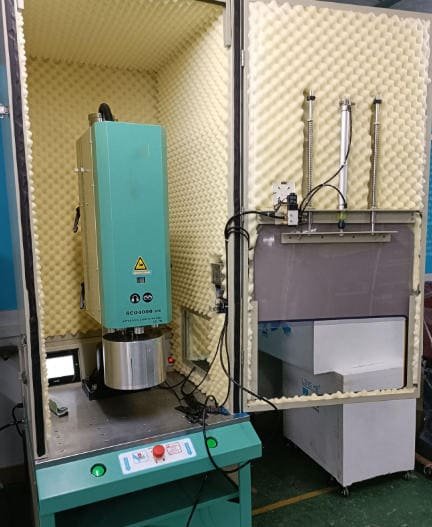
A simple enclosure can cut perceived noise by 5–15 dB(A) if it’s done right.
Practical options:
- Full sound enclosure around the welding station
- Local acoustic hood over the horn and fixture
- Acoustic curtains or panels between welding and walkways
- Double-wall doors with seals on manual load stations
Make sure the enclosure:
- Has proper ventilation for heat and fumes
- Doesn’t restrict access or safety devices
- Uses sound‑absorbing panels, not just sheet metal
3. Do Regular Maintenance to Cut Extra Noise
Most “mystery noise” comes from looseness and bad setup, not the ultrasonic stack itself.
Noise drivers you can fix fast:
- Loose horn, booster, or fixture bolts
- Worn bushings, guides, and slides
- Cracked or damaged horns
- Loose guarding, covers, and panels
- Misaligned parts causing chatter
Set a maintenance checklist for ultrasonic welders:
| Task | Frequency |
|---|---|
| Check horn/booster torque | Weekly |
| Inspect fixtures for looseness | Weekly |
| Inspect horns for cracks | Monthly |
| Tighten guards and panels | Monthly |
4. Follow Clear Hearing Protection Guidelines
Even with quiet machines, you need a simple, written rule set.
Basic approach:
- Under 80 dB(A): Protection usually optional
- 80–85 dB(A): Provide plugs; encourage use
- ≥85 dB(A) (8‑hr TWA): Hearing protection required by most programs
- >90 dB(A): Use well-fitted earmuffs or plugs + muffs together
Make it easy:
- Stock ANSI-rated disposable earplugs at every welding area
- Provide quality earmuffs for setup, tuning, and troubleshooting
- Train people how to insert plugs correctly (most workers under-insert)
5. Improve Positioning, Distance, and Automation
Every extra foot away from the horn helps.
Simple layout changes:
- Move operator UI and part load area slightly off-axis from the horn
- Use auto doors or light curtains so operators can step back during weld
- For louder 15–20 kHz lines, add conveyors or robots to keep people out of the hot zone
- Keep non-essential traffic (inspectors, visitors) out of horn-side walk paths
Rule of thumb: Doubling distance from the noise source can reduce levels by roughly 6 dB in open space.
6. Monitor Workplace Noise Around Ultrasonic Welders
You can’t manage what you don’t measure.
What I recommend:
- Do a baseline noise survey at all ultrasonic welding stations
- Measure at the operator’s ear, not just at the machine
- Log levels during:
- Normal production
- Setup and tuning
- Maintenance and troubleshooting
- Re-check after:
- Adding new welders
- Changing fixtures or horns
- Moving lines or adding enclosures
Use a calibrated sound level meter and keep records. This supports OSHA compliance and any hearing conservation program.
7. Train Your Team on Ultrasonic Welding Noise Safety
The gear is only half the story. People need to know why and how.
Cover in training:
- What does the ultrasonic welding noise level mean in dB(A)
- When hearing protection is required in your plant
- How to wear plugs and muffs correctly
- Why they shouldn’t “tune by ear” with their head next to the horn
- How to report unusual noise (rattling, squealing, sudden level changes)
Short toolbox talks and simple posters near the welders work better than long manuals.
By combining low-noise welders, acoustic control, and clear hearing protection rules, you can run ultrasonic welding with solid productivity and keep your team’s hearing safe.
HYUSONIC’s Quiet-Power Ultrasonic Welding Technology
Ultrasonic Welding Noise Below 78 dB(A)
We design HYUSONIC ultrasonic welders from the ground up to run quietly at the operator position—typically < 78 dB(A) under normal production loads. That’s below most OSHA action levels and noticeably softer than many legacy 20 kHz welders that run in the mid‑80s to 90 dB(A) range.
Typical Operator Noise Levels
| System Type | Operator Noise Level* | Comment |
|---|---|---|
| Older 20 kHz industrial welder | 85–92 dB(A) | Often requires hearing protection |
| Standard mid-range ultrasonic | 80–88 dB(A) | Borderline for long shifts |
| HYUSONIC Quiet-Power | 72–78 dB(A) | Designed for low-noise floors |
*Measured at ~1 m from the horn, normal plastic welding cycles.
Design That Cuts Horn Resonance and Vibration Noise
Quiet-Power isn’t just marketing—we engineer the noise out:
- Optimized horn and booster geometry to reduce stray horn resonance and shrill ringing at the end of each weld.
- Precision frequency control to keep the system locked on the target ultrasonic frequency and avoid noisy hunting or drift.
- Damped frames and mounts to block structure-borne vibration from traveling into the tabletop and machine base.
- Low-noise pneumatic and drive systems to keep air and motion noise down during high-cycle production.
If you’re working with ABS or similar plastics, you can pair this with process-optimized setups like our ultrasonic welding of ABS plastic to keep both weld quality and noise in check.
Third-Party Acoustic Test Reports
To keep noise claims credible, we rely on independent acoustic labs:
- Lab-grade sound level meters used at operator ear height.
- Tests run across multiple duty cycles, materials, and stack configurations.
- Reports confirm typical readings below 78 dB(A) for our Quiet-Power models, with full test conditions documented.
We use this data to help U.S. customers with internal EHS reports, OSHA documentation, and corporate safety audits.
Real-World Results: Automotive & Medical Plants
Our quiet ultrasonic welding machines are already running in:
Automotive interior plants
- Multi-station lines welding dashboards, door panels, and trim.
- Operators reported less “ringing” at the end of shifts and easier communication on the line.
Medical device cleanrooms
- Ultrasonic plastic welding for filters, housings, and non-woven components.
- Noise reduction helped maintain a calm, controlled environment for precision assembly.
In both cases, customers were able to avoid expensive full-room soundproofing by specifying low-noise ultrasonic welders up front.
Benefits for Worker Comfort and Compliance
Quiet-Power pays off on the floor and in your safety documentation:
- Better comfort on long shifts – less fatigue, less irritation from horn noise.
- Easier OSHA and EU compliance – more margin below 85 dB(A) 8‑hour TWA.
- Lower PPE burden – in many setups, you can avoid mandatory double hearing protection.
- Smoother communication – operators can hear each other and alarms clearly.
- Stronger hiring and retention – quieter, cleaner lines are easier to staff and keep staffed.
If you’re looking at line upgrades or new projects, Quiet-Power gives you a quiet ultrasonic welding machine that still delivers full weld strength, similar to our performance-focused systems like those used in full vs. semi-wave ultrasonic welding setups.
Legal and Compliance Requirements for Ultrasonic Welding Noise
When you run ultrasonic welding in the U.S. (or export to the EU and China), noise compliance isn’t optional—it’s a legal requirement and a big part of protecting your team.
OSHA 1910.95 Noise Rules (USA)
Under OSHA 29 CFR 1910.95, ultrasonic welding noise is treated like any other industrial noise:
- Action level: 85 dB(A) 8‑hour TWA (time‑weighted average)
- Permissible limit: 90 dB(A) 8‑hour TWA
- If your ultrasonic welding noise hits the action level or higher, you must:
- Run a hearing conservation program
- Provide hearing protection (earplugs or earmuffs)
- Offer baseline and annual audiograms
- Train employees on ultrasonic welding noise safety
Even if your ultrasonic welder is “quiet,” you still need objective data from noise measurements at the operator’s position.
EU Noise at Work Regulations (2005/2006)
If you ship equipment or have plants in Europe, the EU Noise at Work Directive applies to ultrasonic welding:
- Lower exposure action value: 80 dB(A) LEP,d
- Upper exposure action value: 85 dB(A) LEP,d
- Limit value: 87 dB(A) (including hearing protection)
At 80 dB(A), employers must:
- Assess ultrasonic welding noise risks
- Inform and train workers
At 85 dB(A) and up:
- Provide mandatory hearing protection
- Mark high‑noise zones around ultrasonic welding lines
- Implement engineering controls (enclosures, barriers, low-noise machines)
China GBZ 2.2-2007 Standards
For Chinese plants or customers, GBZ 2.2‑2007 sets workplace noise limits for ultrasonic equipment:
- Typical continuous workplace noise limit: ≤85 dB(A) for an 8‑hour shift
- Requirements include:
- Regular noise testing around ultrasonic welders
- Provision of hearing PPE when levels are high
- Documentation for occupational health inspections
Employer Responsibilities for Ultrasonic Welding Noise
If you run ultrasonic welders, you’re responsible for:
- Measuring ultrasonic welding noise level at the operator’s ear height
- Documenting dB(A) levels and exposure time
- Controlling noise: engineering (quiet machines, acoustic enclosures), administrative (rotation), PPE
- Training operators, setup techs, and maintenance staff
- Selecting equipment with proven low noise performance (we design our ultrasonic welders to stay below 78 dB(A) at the operator position whenever possible)
Quick Compliance Checklist (Buying & Installing Ultrasonic Welders)
Use this simple checklist before you bring a new ultrasonic welder into your plant:
| Compliance Step | What You Need to Do |
|---|---|
| Noise spec review | Confirm the supplier provides documented dB(A) ratings at the operator position and duty cycle. |
| Machine selection | Prefer low noise ultrasonic welders and rigid, low-resonance tooling (for example, properly designed ultrasonic sonotrodes). |
| Pre-install survey | Check existing background noise so you know the total exposure after installation. |
| Post-install noise test | Measure ultrasonic welder decibels at the typical operating distance (OSHA-compliant meter). Record results. |
| Engineering controls | Add acoustic enclosures, barriers, or automation if levels approach 80–85 dB(A). |
| PPE policy | Set clear hearing protection requirements by noise range (e.g., ≥85 dB(A) = mandatory). |
| Training & signage | Train operators on ultrasonic welding safety and post noise warning signs where needed. |
| Annual review | Re-test ultrasonic welding noise yearly or whenever you change process, horn, or tooling. |
When we design and supply ultrasonic welding systems for the U.S. market, we build around these rules from day one, so it’s easier for you to pass safety audits and stay compliant without slowing production.
Frequently Asked Questions About Ultrasonic Welding and Hearing
Is 20 kHz ultrasonic welding louder than 35 kHz systems?
In most real-world setups, yes.
20 kHz ultrasonic welders usually:
- Produce more audible horn resonance in the 4–16 kHz range
- Measure higher dB(A) at the operator position compared with 30–35 kHz systems
- Feel “sharper” or more annoying to the ear, even at similar decibel levels
Higher-frequency systems (30–35 kHz) tend to sound “quieter” and are easier to enclose acoustically, which is why many U.S. medical and electronics plants prefer high-frequency quiet ultrasonic welding machines for operator comfort.
Do I need ear protection if ultrasonic welding noise is below 85 dB(A)?
If your ultrasonic welding noise is consistently below 80–82 dB(A), most standards don’t require mandatory hearing protection, but I still recommend:
- Ear plugs or earmuffs for operators working close to the horn all day
- Extra protection for workers with existing hearing issues or tinnitus
- Optional PPE for short tasks, like setup or quick inspections
85 dB(A) (8-hour TWA) is the OSHA action level, but good practice in U.S. facilities is to treat 80 dB(A) as the point where you start offering hearing protection and training.
Can ultrasonic welding cause tinnitus or permanent hearing damage?
Yes, but mainly from overall noise level, not the ultrasonic frequency itself.
- Prolonged exposure above 85 dB(A) can increase risk of tinnitus and permanent hearing loss.
- The main concern is audible noise from horn resonance, mechanical vibration, and fans.
- Ultrasonic energy above 20 kHz is mostly inaudible and not the primary driver of hearing damage in standard industrial use.
If workers report ringing, fullness in the ears, or trouble hearing speech after a shift, you need immediate noise monitoring and a stronger hearing conservation program.
Are handheld ultrasonic welders noisier than tabletop or automated units?
Often yes, especially if:
- The operator is very close to the ultrasonic horn
- There’s no sound enclosure or acoustic treatment
- Parts are poorly fixtured, causing extra vibration and rattling
Floor-standing or automated ultrasonic plastic welders are easier to enclose and position away from the operator, which usually results in lower effective exposure. Handheld ultrasonic welders can still be safe, but they demand stricter PPE and training.
How often should workplace ultrasonic welding noise be measured and recorded?
For a U.S. facility running ultrasonic welders daily, I suggest:
- Baseline survey when you install or move any ultrasonic welding line
- Annual noise measurements in normal operation
- Extra measurements after:
- Major maintenance or horn/fixture changes
- Process changes that alter cycle time or duty cycle
- Employee complaints about noise or discomfort
Document readings, locations, times, and machine conditions. This protects your employees and keeps you aligned with OSHA recordkeeping expectations for ultrasonic welding noise levels.
What is a safe distance from the ultrasonic horn during welding?
There’s no single “magic” number, but distance matters a lot:
- Every doubling of distance from the horn can reduce noise by roughly 3–6 dB(A) in open space.
- For typical industrial setups, keeping operators at least 20–30 inches from the horn (when feasible) helps cut down exposure.
- Use fixtures, guards, automation, and foot-pedal actuation so hands and heads stay out of the high-noise zone.
If you’re using handheld units, choose low-noise ultrasonic welders and enforce consistent hearing protection since the operator is always very close to the source.